Hong Kong Electronics Fair: What Business Visitors Should Know Before Networking
If you prepare clear objectives, capture context at the show, and follow up fast and personally, a visit to the Hong Kong Electronics Fair becomes a predictable generator of business opportunities. This article gives a practical workflow for before, during, and after the fair.
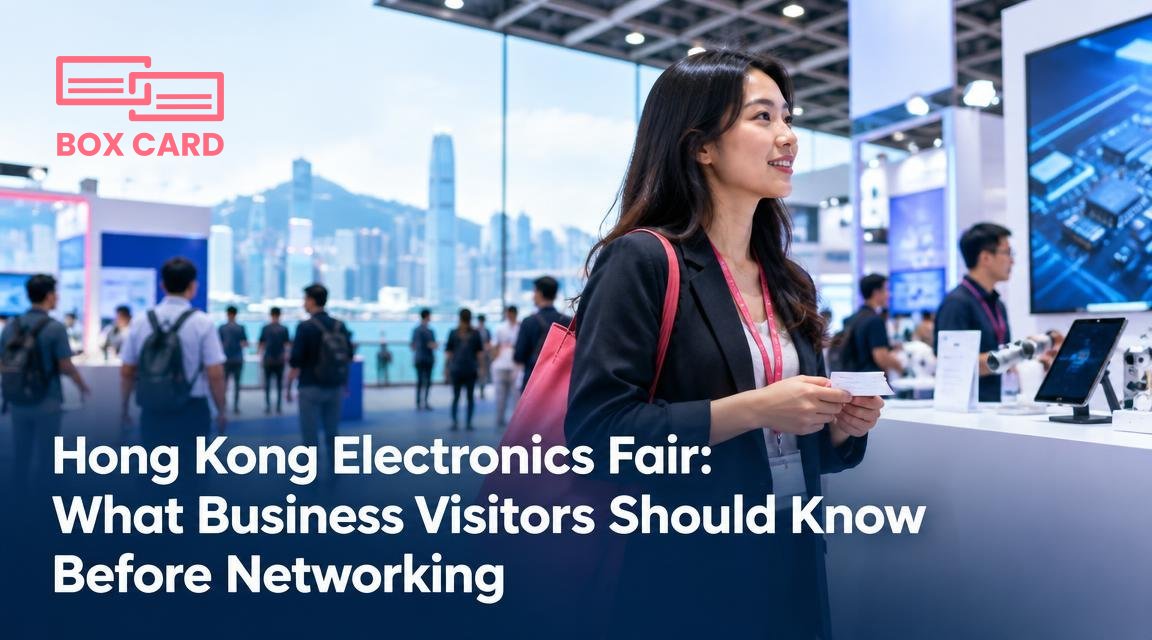
You will meet dozens if not hundreds of new people at the Hong Kong Electronics Fair. Which conversations turn into useful contacts depends less on luck and more on preparation, timing, and how you capture and act on information. This article helps business visitors set priorities before the fair, manage conversations during the show, and turn paper exchanges into productive follow-ups.
Image note: an editorial photo appears here.
Before you go: decide what a successful visit looks like
Start by defining one clear objective for the fair: a measurable result you can check at the end of each day. Examples:
- Find two component suppliers with MOQ under X and a sample lead time under Y.
- Book five qualified meetings with distributors in Southeast Asia.
- Collect 30 decision maker contacts and convert 20 percent to calls within two weeks.
Once you have that objective, choose 3 to 5 target companies or product areas to prioritize. Use the fair website and exhibitor directory to flag booths to visit, and reach out in advance to schedule short meetings. If you are traveling, sort logistics so you arrive rested and with spare business cards.
How to plan outreach and your elevator pitch
Trade-show conversations are short. Prepare two versions of your pitch:
- 30-second pitch: who you are, what you buy or sell, and one clear value you bring.
- 90-second pitch: adds a concrete example, relevant metric, or a question that surfaces needs.
Write 2 to 3 tailored openers for different contact types: supplier, distributor, investor, potential customer. For example, when approaching a supplier ask, What production capacity do you have for small runs and sample lead times? That kind of question moves the conversation toward qualification instead of small talk.
Networking during the show: a practical workflow
Use this sequence to keep momentum and maximize useful contacts.
- Prioritize booths each morning. Start with your top three targets. Walk the hall map to avoid wasting time backtracking.
- Schedule short meetings. If a booth looks promising, book a 15 to 20 minute meeting rather than trying to get everything in a standing conversation.
- Ask qualifying questions early. Size, timeline, budget, current suppliers, and decision makers. If a contact cannot answer, ask who in their organization can.
- Exchange cards with context. When you exchange a card, say one sentence about next steps: For example, I will send links to our product spec sheets tomorrow morning. This gives you permission to follow up and reminds both parties why you met.
- Record one quick note. Immediately after the conversation, jot one or two keywords on the card or in your phone about what you discussed. The memory fades fast at a busy fair.
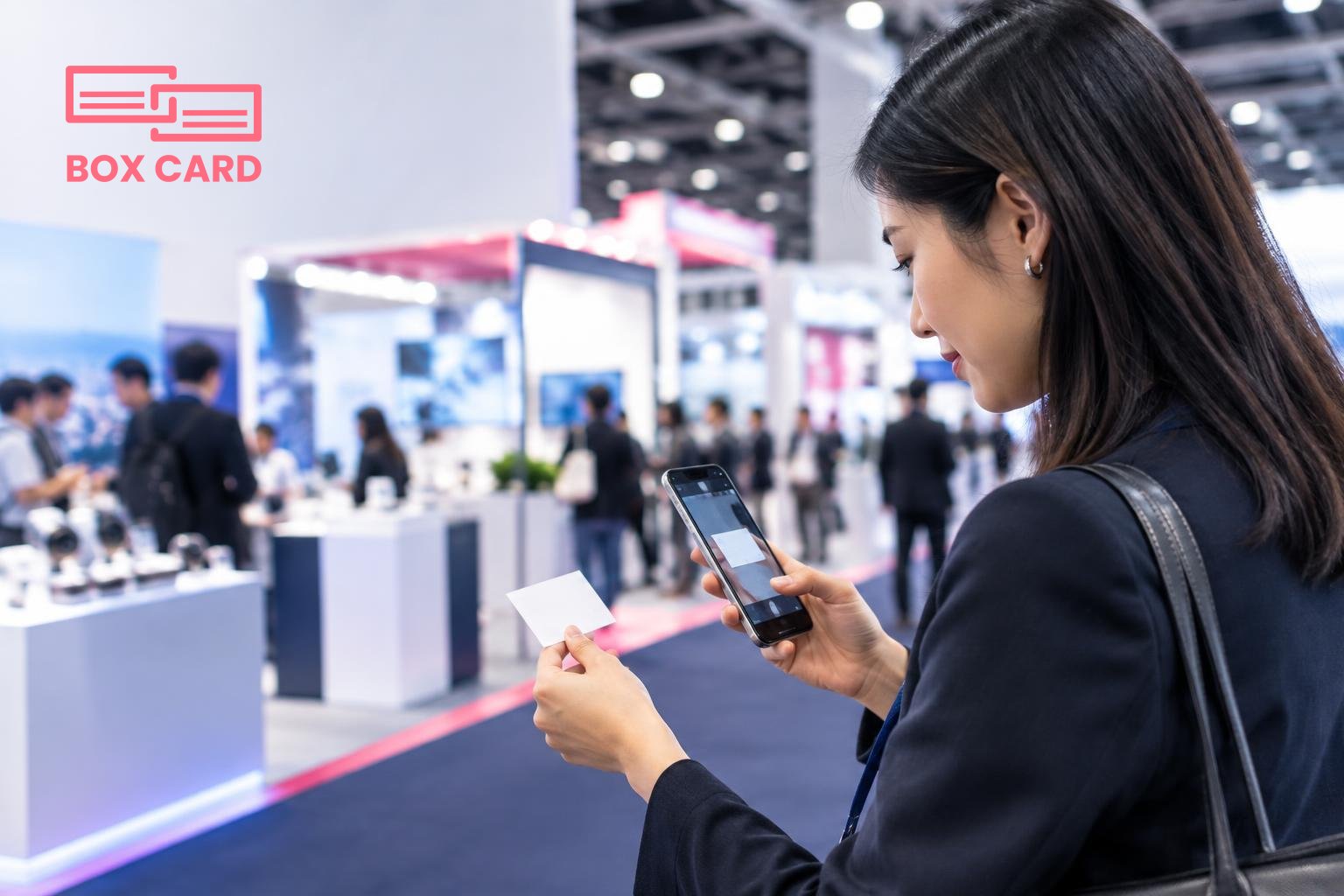
- Use a scanning app on the spot. Scan business cards before you leave the hall each day so contact details are captured accurately and you can tag them by priority. A card scanning app such as Boxcard can digitize and organize those contacts for follow-up.
Paper cards, digital options, and when to use each
Business cards remain the default token at Hong Kong trade shows, but digital alternatives are common. Decide which to carry and when to offer them.
- Give a paper card when a relationship feels formal. Paper cards are tangible and still read as polite and professional in this market.
- Share a digital contact when speed or hygiene matters. Use a QR code on your phone or a contact-sharing app if the other person prefers it.
- Dual approach. If the contact seems important, hand over a paper card and then immediately scan theirs. That captures the exchange and gives you a digital copy with your notes.
How to capture context effectively
Collecting contact details is easy. Capturing context is what makes the contact valuable. Use these fields or notes:
- Role and decision authority: Are they the buyer, technical lead, or an influencer?
- Immediate need and timeline: Do they need samples this month, or is this a one-year roadmap?
- Objections and constraints: Price sensitivity, certifications required, logistics limits.
- Next step agreed: Send specs, schedule a factory visit, or arrange a demo.
Tools: a small Moleskine, voice memos, or a contact app. The key is consistency: pick one way to record notes and use it for every meeting.
Follow-up that actually converts
Follow-up is where most trade-show opportunities fail. Use this timing and templates:
- Within 24 to 48 hours: Send a short, personal email referencing the meeting and the agreed next step. Attach one useful document only: a spec sheet, product list, or a calendar link for booking a demo.
- Three to seven days later: If you did not get a reply, send a concise reminder with a specific call to action, for example, Please let me know if Thursday 10:00 or Friday 15:00 suits you for a 20 minute call.
- Two weeks later: For high-priority leads, follow up by phone or LinkedIn with a brief value add, such as a case study or a relevant reference.
Sample first email, short version: Thank you for your time at the fair today. I enjoyed our discussion about X. Attached is the spec sheet I promised. Would you be available for a 20 minute call next week to discuss logistics? Best, [Name].
Qualify quickly and prioritize leads
Not every card is equal. Use a simple rubric to sort leads into three buckets:
- High priority: Decision maker, clear need within 3 months, budget aligned.
- Medium priority: Influencer or potential partner, need within 6 to 12 months, follow-up required to determine budget.
- Low priority: General interest or long-term lead, keep for newsletters or periodic outreach.
Prioritize follow-up by expected value divided by time to close. High-value contacts with short timelines get the fastest, most personal follow-up.
Common mistakes to avoid
- Collecting cards without notes. Without context, a card is just paper.
- Sending generic mass emails after the show. A personal one-sentence reminder referencing your conversation gets far better response rates.
- Trying to meet everyone. Quantity hurts quality; focus on well-qualified prospects.
- Letting business cards sit in a pocket for weeks. Scan and tag within 48 hours.
- Neglecting cultural courtesy. A polite greeting and clear next steps keep meetings smooth.
Using a scanning app responsibly
A card scanning app is only as useful as your process. If you choose to use an app such as Boxcard, follow this routine:
- Scan each card at the end of the conversation so you capture exact spelling and role.
- Immediately add one-line notes: priority level and next step.
- Tag contacts by category: supplier, distributor, prospect, press.
- Review and act on high-priority tags within 48 hours.
This keeps your digital Rolodex tidy and makes follow-up systematic rather than guesswork.
Short checklist to print and take to the fair
- Objective for the fair and three target companies.
- Two versions of your pitch, and three tailored openers.
- 30 to 50 physical business cards and a digital sharing option.
- Phone with a card scanning app installed and working.
- Notebook or app to record one-line notes after each meeting.
- Follow-up templates ready to send within 48 hours.
Quality contacts and quick follow-up matter more than how many cards you collect.
If you prepare clear objectives, capture context at the show, and follow up fast and personally, a visit to the Hong Kong Electronics Fair becomes a predictable generator of business opportunities. Your next step: prioritize three target booths tonight, prepare your 30-second pitch, and install a card scanning app so you can convert conversations into actions from day one.