Art Basel Hong Kong: How Art Events Create Valuable Business Connections
Art fairs can produce real business outcomes when you plan ahead, capture context at the booth, and follow up with specific next steps. This article gives step-by-step actions to turn meetings at Art Basel Hong Kong into lasting professional relationships.
You are at Art Basel Hong Kong with a stack of business cards, a few names saved in your phone, and one clear objective: turn conversations into real business relationships. Art fairs are noisy and social, but they also produce valuable, industry-specific connections if you approach them with simple discipline. This article shows what works and what does not, with practical steps you can use before, during, and after the fair.
What a business connection at an art fair actually looks like
Not every encounter at Art Basel becomes a contract. Most useful connections fall into clear types:
- Collector introductions: a way into a new buyer or private collection.
- Gallery partnerships: commissioning, co-presenting, or representing an artist.
- Corporate art sourcing: connecting facilities managers, architects, or HR teams who buy art for offices.
- Creative and marketing collaborations: brand projects, content partnerships, or events.
- Service relationships: framers, shippers, insurers, conservators, and PR specialists.
Each type has different timelines and expectations. A collector introduction may lead to a private viewing within days, while a corporate procurement process can take months. Treat events as the first step in a chain, not the final goal.
Before the fair: prepare like you are scheduling meetings
Preparation separates casual attendees from people who actually get results.
- Define two clear goals. One short-term: meet three gallery directors who work with contemporary sculpture. One long-term: locate a corporate contact who oversees workplace art for companies in your city. If your goals are too vague you will drift.
- Research selectively. Review the exhibitor list and public programme. Identify five booths and three talks that matter for your goals. Follow those galleries, speakers, and curators on social, and read one recent press release or exhibition note for each.
- Schedule touchpoints. Email or message people you most want to meet and propose a 15 minute window during the fair. If you cannot get an appointment, plan a time to visit their booth while they are likely present, such as opening hours or just after panel discussions.
- Prepare a short pitch and one piece of value. Your elevator line should state who you are and why the person should care, in one sentence. Also prepare one immediate offer of value, for example a contact in procurement, a buyer profile, or a test installation idea.
At the fair: where to invest your time
There are predictable places where useful conversations start. Choose intentionally rather than wandering.
- Booths you researched. Visiting targeted booths lets you reference recent shows or specific artists, which creates immediate credibility.
- Talks and panels. Speakers attract industry people. Attend a panel, ask a thoughtful question, then approach the speaker afterwards. The shared context makes follow-up easier.
- Curator tours and guided visits. These attract collectors and advisors and give you material to discuss later when you reach out.
- Hospitality spaces and satellite events. Lounges, sponsor events, and evening receptions are better for relaxed, longer conversations. Use these for relationship building rather than a hard sell.
Two practical conversation tactics:
- Lead with curiosity: ask what brought the person to this pavilion, which artist or project they are thinking about, or what trends they notice. People remember good questions.
- Offer one specific next step: a private viewing, an introduction, or a short call to discuss ideas. Avoid vague promises like let us stay in touch.
Collecting and managing contacts without losing them
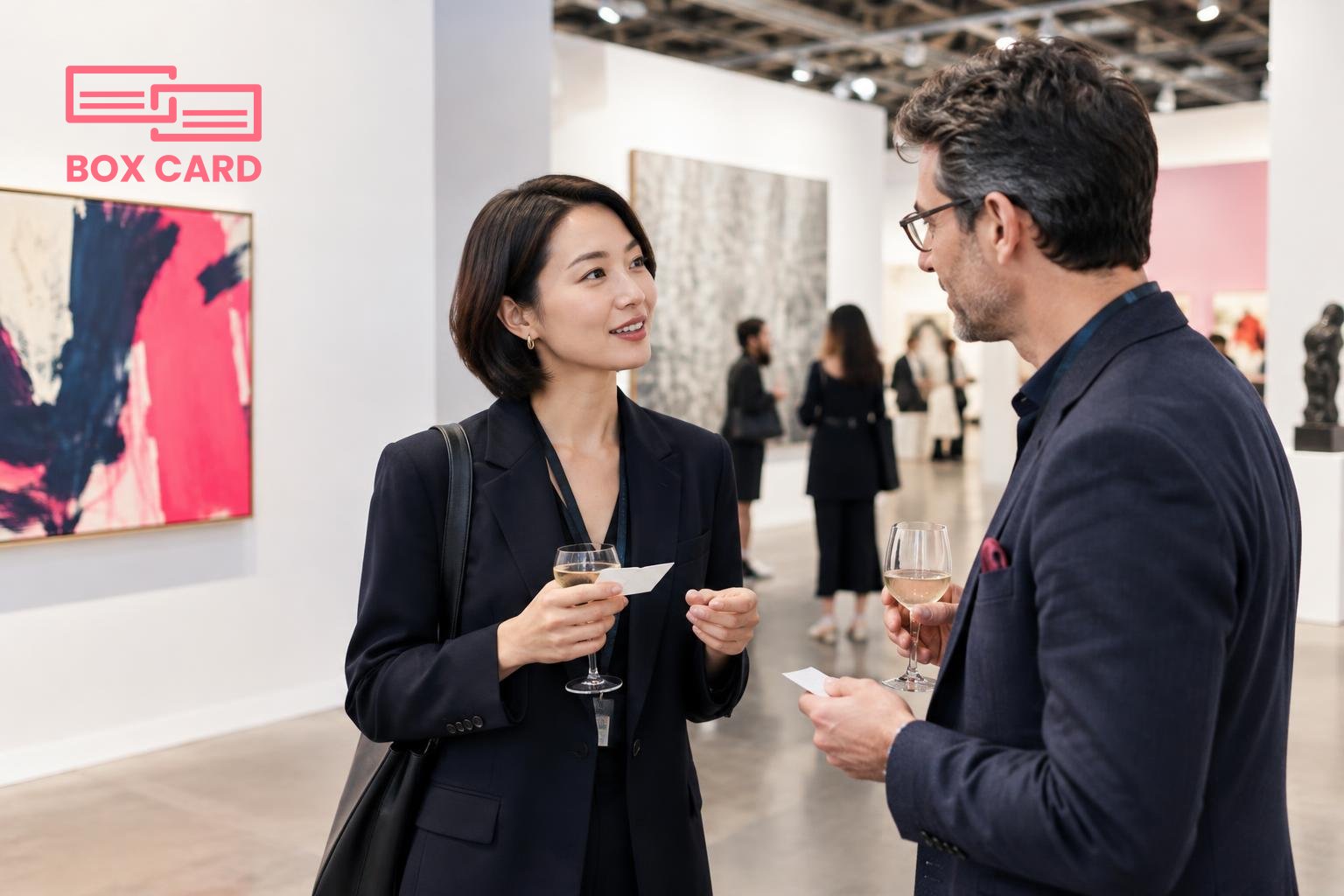
Business cards still matter in art worlds. How you capture and organize them determines whether a lead ever returns.
- Collect with a purpose. Use a physical card or a quick photo of a badge when the other person declines a card. Keep notes on the back of a card or in your phone immediately after the meeting.
- Digitize promptly. Scan cards the same day while the encounter is fresh. Digital scans retain details and allow you to tag contacts by role, priority, and follow-up action. For example, scan a gallery director as Gallery, Priority 1, Follow-up: proposal.
- Use a contact management tool to add context. A simple app that scans and organizes business cards removes the risk of losing paper. Notes you add should include where you met, what was discussed, and the agreed next step. Mentioning Boxcard here can help: it scans and organizes business card information, which makes sorting fair contacts and retrieving them later easier.
Follow-up that actually gets replies
Most networking fails at follow-up. The key is speed and specificity.
- Within 48 hours: send a short email or message. Remind them where you met, reference a detail from the conversation, and propose a concrete next step. Example: "Great to meet you at the gallery booth. I mentioned a venue that commissions site-specific pieces. Would you be open to a 20 minute call next week to explore that?"
- Provide value in the first message. Attach one useful item: a link to a relevant artist, a PDF with commissioning guidelines, or a short list of trusted shippers. People respond when they get useful, relevant material.
- Set a decision-friendly cadence. If there is no reply, send one polite reminder after a week, then close the loop after two more attempts. Record the outcome and the time you contacted them in your contact manager.
Common mistakes and how to avoid them
- Mistake: collecting cards without context. Fix: note the conversation and priority immediately, either on the card or in the app.
- Mistake: attending too many events and not following up. Fix: restrict active follow-up to the top 10 contacts you met each day.
- Mistake: being transactional at first contact. Fix: build rapport and ask about current projects before asking for favors.
- Stakeholder mismatch. Fix: aim your pitch at the right person. A gallery director and a collector respond to different language and offers.
When to pursue a fast deal and when to build slowly
Decide based on the contact type and your objective.
- Fast conversions. Small transactions like prints, limited editions, or installation logistics can move quickly. Use immediate follow-up and clear pricing.
- Slow builds. Large commissions, representation agreements, or corporate procurement need time. Plan a sequence: introduction, private viewing, proposal, then negotiation over months.
Match your follow-up rhythm to the expected timeline. Pushing too hard for a quick decision on a long-term process damages the relationship.
Quality of connections beats quantity: three relevant conversations with follow-up are more valuable than thirty unattended business cards.
Practical next steps after Art Basel Hong Kong
- Within 48 hours: scan all cards and add a one-line note about the conversation.
- Within a week: send personalized follow-up messages to your top 10 contacts, including one piece of value each.
- Schedule two concrete actions for the next month: one quick win meeting and one exploratory conversation that could become a longer term partnership.
If you have limited time at the fair, pick between spending it at targeted booths where you can prepare and follow up, or at social events where you build rapport. If you want measurable outcomes within 30 days, choose targeted meetings. If you want to expand your network and explore new opportunities, prioritize social events.
Attend with a plan, capture context, and follow up with purpose. Art Basel Hong Kong offers access to collectors, curators, and creative professionals that are hard to reach elsewhere. The difference between an interesting conversation and a business connection is the small work you do before and after the fair.